Aptamers: Therapeutics, Technologies, and Services Market
Aptamers have gained significant momentum over the past decade. It’s worth noting that in 2005, Macugen became the first and only aptamer drug approved by the USFDA for the treatment of age-related macular degeneration (AMD). More than 15 million people have been reported to have AMD in the US alone, with 200,000 cases per year across North America. This indicates a large unmet patient need and paves the way for aptamer-based solutions due to their advantages over traditional antibody-based therapies.
Over the past three decades, since the invention of SELEX by Larry Gold and Jack William in 1990, the technology has undergone numerous modifications to streamline and standardize the aptamer isolation process.

Steps of the SELEX process:
- Generation of a library: An oligonucleotide library is generated containing single-stranded nucleic acids with random sequences flanked by binding sites.
- Binding and Release: The target molecule is incubated along with the oligonucleotide library, allowing nucleic acids to bind to it, resulting in the formation of aptamers. Remaining unbound nucleic acids are filtered out of the solution and the elution process separates the bound nucleic acid from the target.
- Amplification: Nucleic acids separated by the elution process are used to create a new library by polymerase chain reaction (PCR), this provides a new library that can be used for a new round of SELEX, thereby improving the quality of the aptamers. synthesized
ADVANTAGES OF APTAMERS
For many years, researchers have created and modified antibodies to detect specific circulating proteins and to develop specific therapeutics. While antibodies are highly effective for a variety of applications, there are unique aptamer advantages that can overcome some difficult scientific challenges.
- Pursuit of toxic and non-immunogenic targets: No animals or living cells are involved in the aptamer development process, so it is possible to select aptamers for toxic compounds such as zootoxins and pathogenic bacteria. Furthermore, aptamers do not require an immune response or binding of tertiary aptameric structures to target molecules.
- Penetrate Tissues and Cells: Due to their small size (30–80 nucleotides), they have a greater ability to penetrate tissues, allowing them to hit specific targets efficiently. Some aptamers can enter cells unaided.
Alternative way of treatment and diagnosis — Aptamer-based products
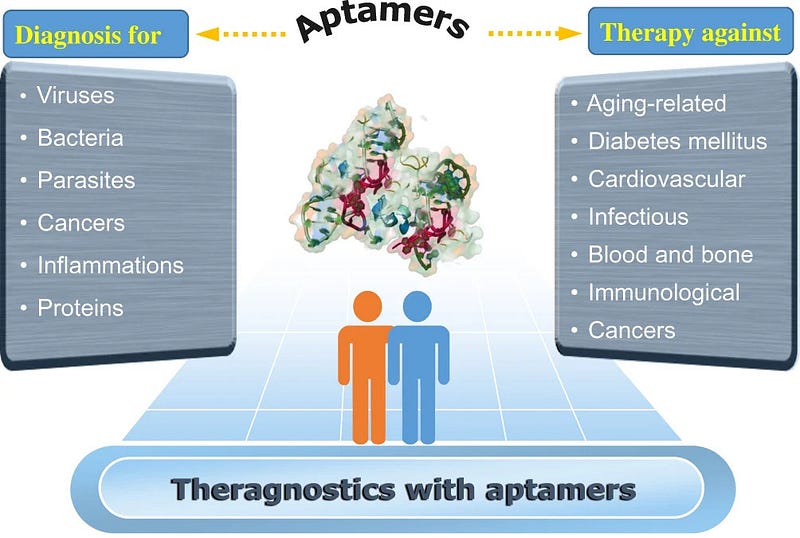
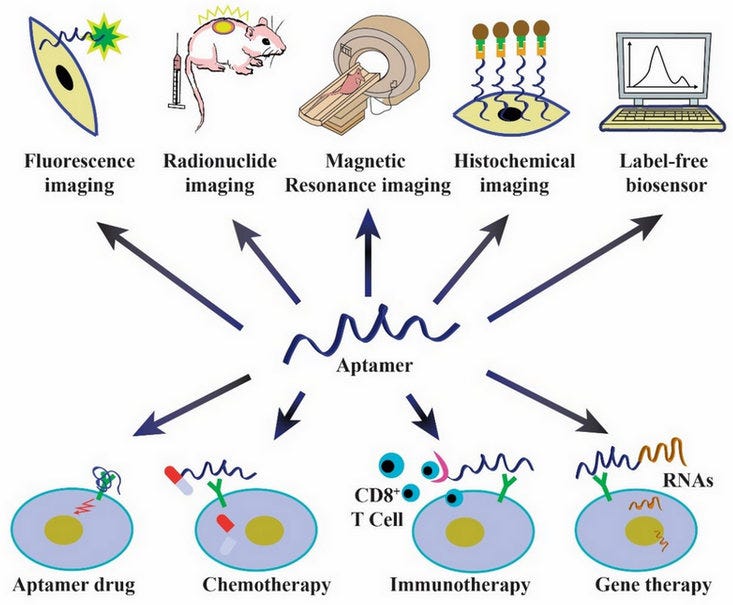
Aptamer-based products (therapies and technologies) have offered an effective and alternative way of treatment and diagnosis. In fact, owing to their applicability across a wide range of clinical conditions, such as ocular disorders, oncological disorders and hematological disorders, the demand for such therapies is likely to witness a surge in the foreseen future. To cater to such higher demand, drug developers are actively seeking to enter collaborations with contract manufacturers.
.jpg)


Comments
Post a Comment